
-
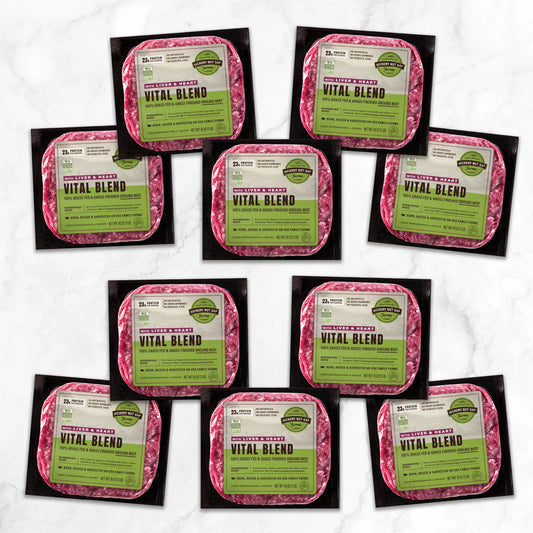
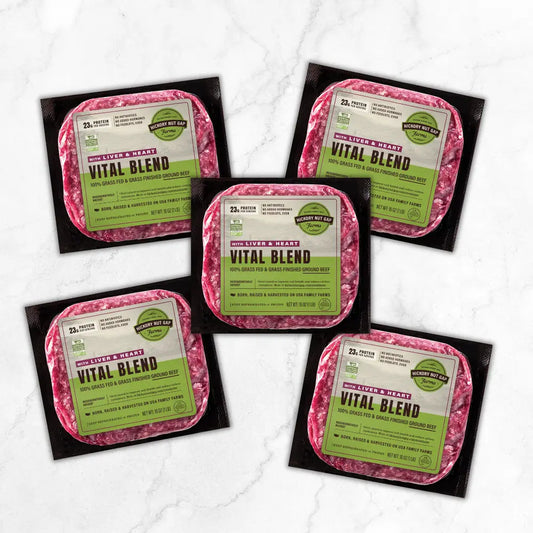
100% Grassfed Beef Vital Blend with Heart & Liver (10 lbs)
Regular price $133.00 USDRegular price$140.00 USDSale price $133.00 USDSale -
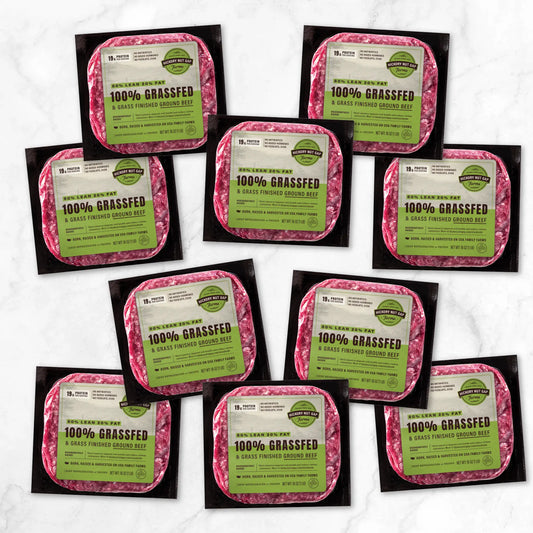
100% Grassfed Beef 80/20 (10 lbs)
Regular price $123.50 USDRegular price$130.00 USDSale price $123.50 USDSale -
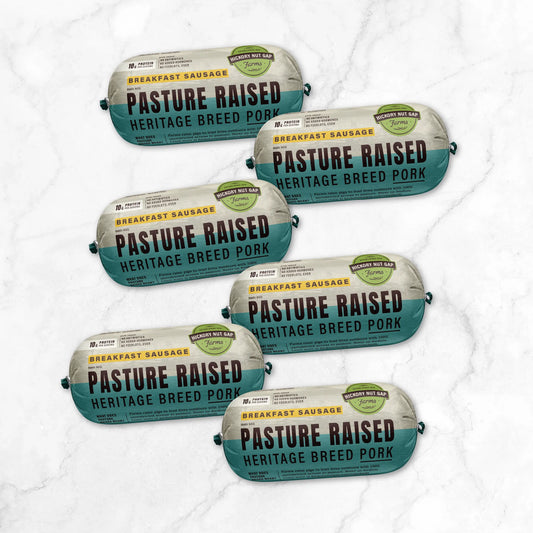
Pasture Raised Pork Breakfast Sausage (6 count)
Regular price $61.00 USDRegular price -
100% Grassfed Ground Beef 90/10 (10 lbs)
Regular price $148.20 USDRegular price$156.00 USDSale price $148.20 USDSale -
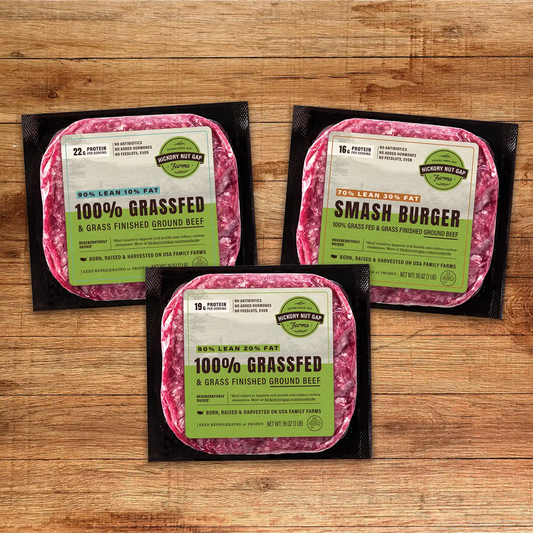
100% Grassfed Ground Beef Sampler
Regular price $90.00 USDRegular price -
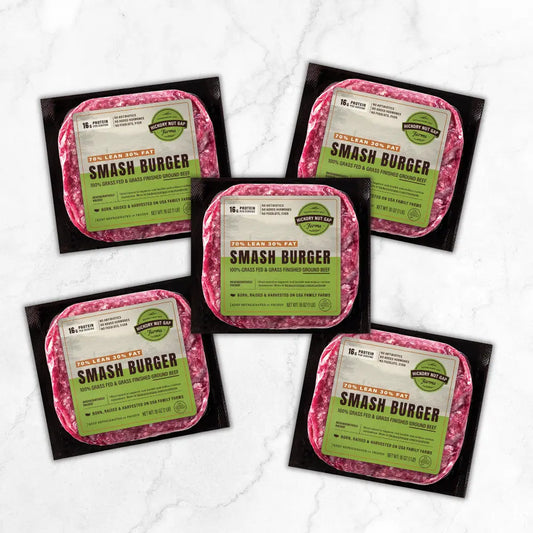
100% Grassfed Beef Smash Burger (10 lbs)
Regular price $119.00 USDRegular price -
Pasture Raised Pork Italian Sausage (6 count)
Regular price $62.00 USDRegular price -
Pasture Raised Pork Chorizo Sausage (6 count)
Regular price $62.00 USDRegular price -
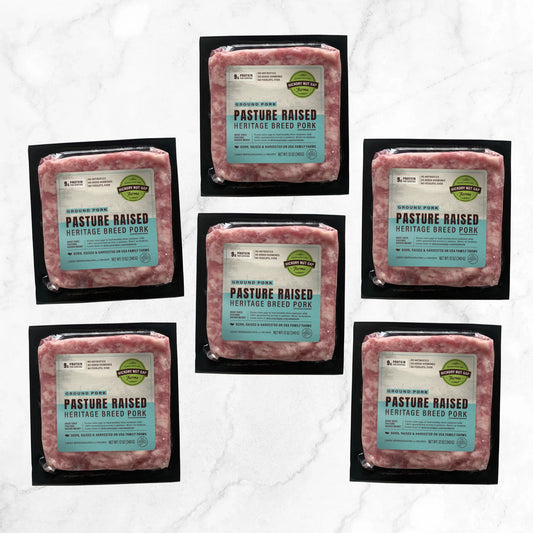
Pasture Raised Ground Pork (6 count)
Regular price $62.00 USDRegular price -
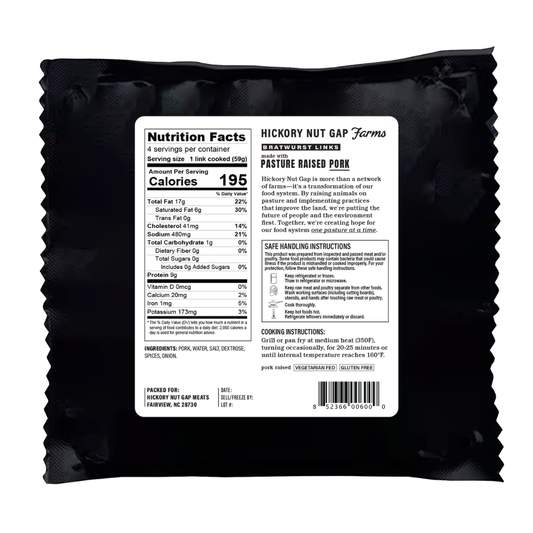
Pasture Raised Pork Bratwurst Links (6 count)
Regular price $62.00 USDRegular priceUnit price $10.33 each -
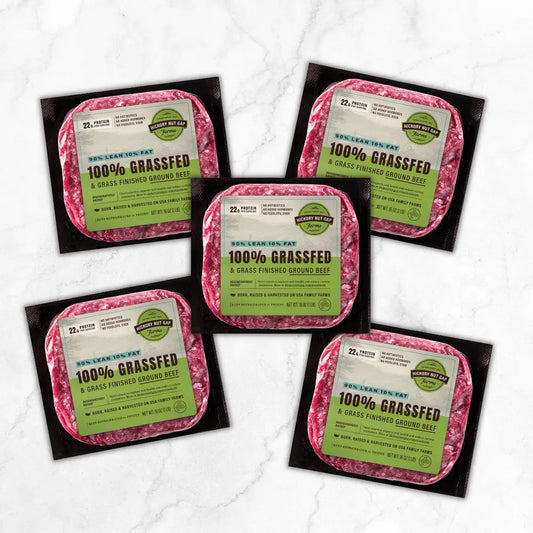
100% Grassfed Ground Beef 90/10 (5 lbs)
Regular price $78.00 USDRegular price -
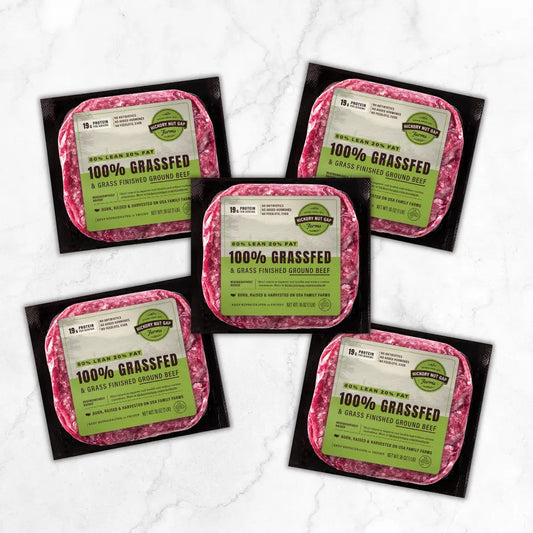
100% Grassfed Beef 80/20 (5 lbs)
Regular price $65.00 USDRegular price -
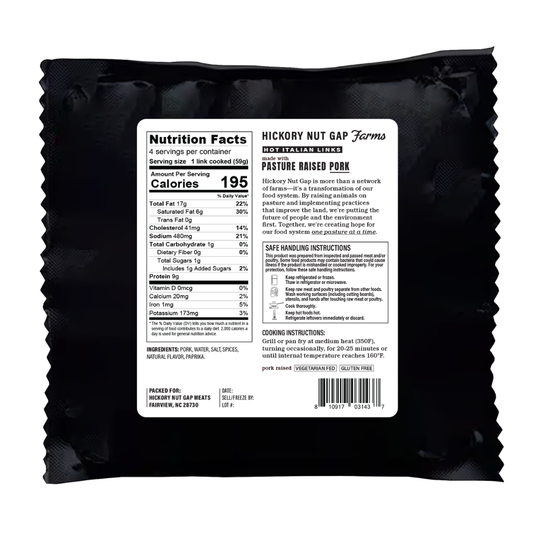
Pasture Raised Pork Hot Italian Links (6 count)
Regular price $62.00 USDRegular priceUnit price $10.33 each -
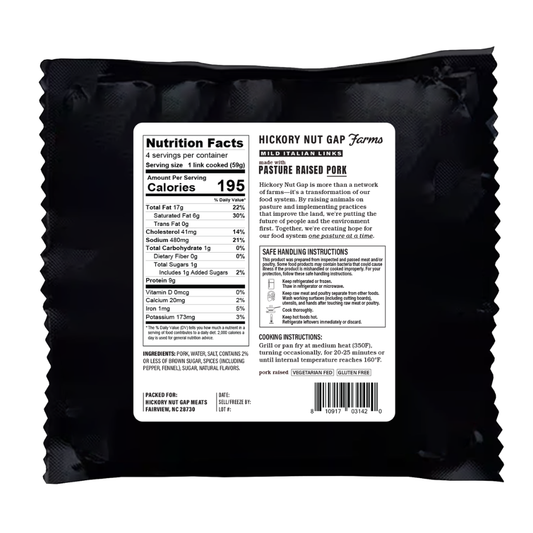
Pasture Raised Pork Mild Italian Links (6 count)
Regular price $62.00 USDRegular priceUnit price $10.33 each -
100% Grassfed Beef Vital Blend with Heart & Liver (5 lbs)
Regular price $69.00 USDRegular price -
100% Grassfed Beef Smash Burger (5 lbs)
Regular price $60.00 USDRegular price





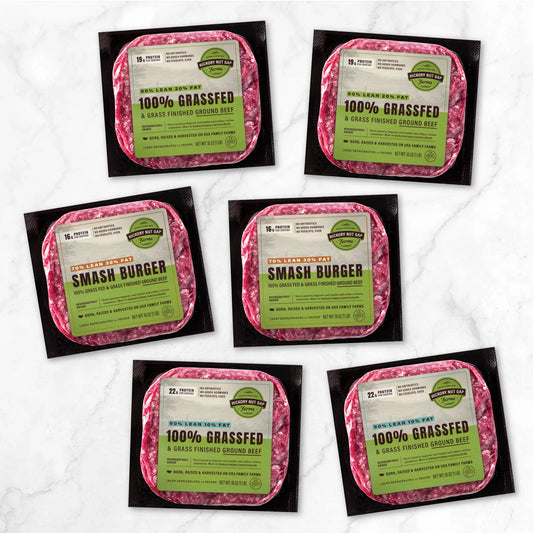

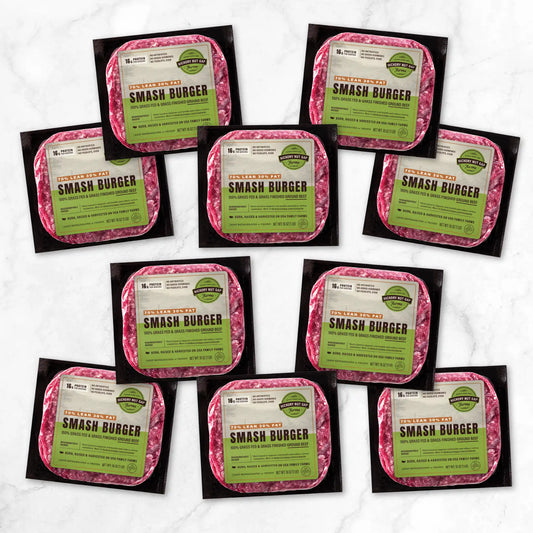

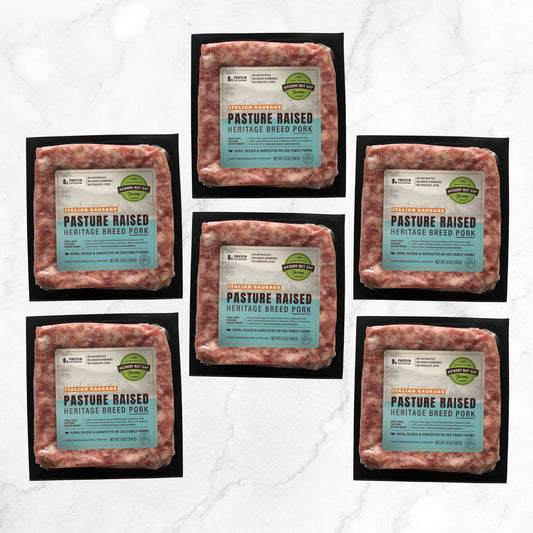

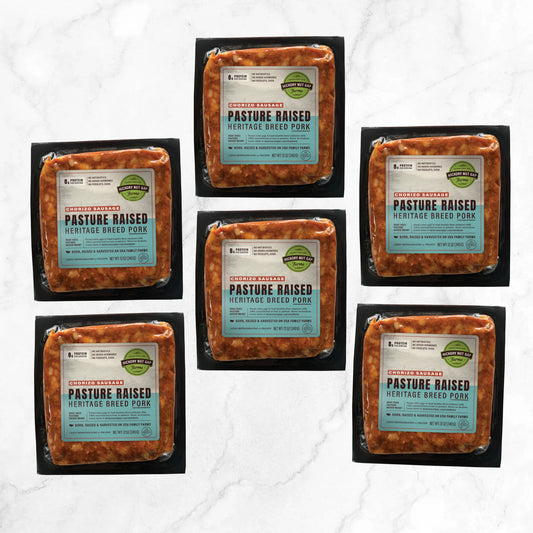








Hickory Nut Gap 100% Grassfed Beef & Pasture Raised Pork Grinds
What does “100% grassfed” actually mean?
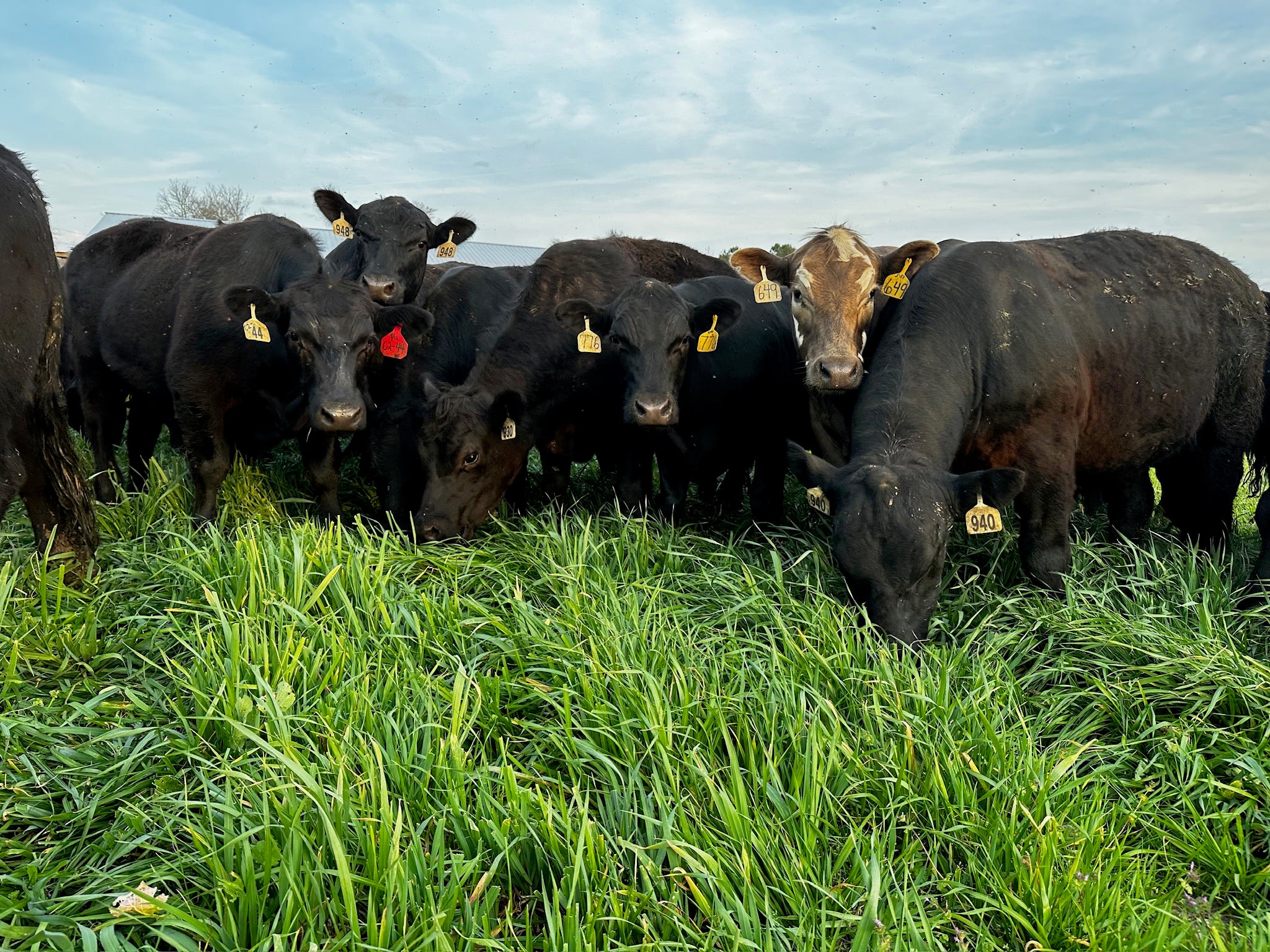
100% Grassfed Beef is raised from livestock that begins its first stage of life nursing and grazing, after weaning our cattle are on pasture eating grass, hay or baleage depending on what the season warrants. That means no feedlots, ever!
Is there a difference between “grassfed” and “grass-finished”?
Grassfed is a general term that can also be inclusive of animals that have been grassfed and then grain finished. It is important to know the standards that a company follows to make a conscious food choice. You can feel confident that Hickory Nut Gap beef is 100% grassfed and 100% grass finished, never supplemented or fed grain.
Is grassfed beef more nutritious?
Yes — 100% grassfed beef is typically more nutrient-dense than conventional, grain-fed beef. Because our cattle spend their lives on pasture eating a natural diet of grasses and forage, the resulting beef often contains higher levels of omega-3 fatty acids, antioxidants, vitamins, and minerals, along with a more favorable omega-6 to omega-3 ratio.
At Hickory Nut Gap, we’re committed to going beyond assumptions — we measure nutrient density. As proud members of the Nutrient Density Initiative, we actively participate in nutrient density testing with Edacious, an organization pioneering tools to analyze the nutritional quality of food from farm to plate. This partnership helps us better understand how our regenerative, pasture-based practices translate into real nutritional benefits for you.
Is grassfed beef better for the environment?
Contrary to the narrative that beef is bad for the environment, regenerative practices actually help reverse climate change. That means that when farmers practice managed grazing, cattle keep the grasses healthy with deep roots that help with water retention, all which leads to greater biodiversity and the sequestration of carbon into mineral rich soils.
This is very different from the practices that take place on factory-style farms where hundreds if not thousands of cattle are kept in confinement. The cows are not grazing on the land, benefiting the soils, and allowing the environment to thrive in those situations, so naturally the toxic methane levels are having a negative impact.